


Bridge Scaffolding System Manufacturer
Rapid provides engineered scaffolding systems for new bridge construction, bridge repair, inspection and maintenance projects.
Depending on the bridge structure, site conditions, working height, load requirements and access restrictions, our engineering team can design customized scaffolding configurations for:
- Bridge piers and pylons
- Bridge decks and soffits
- Under-bridge access
- Abutments
- Cantilever working platforms
- Stair towers and access towers
- Temporary working platforms
- Heavy-duty shoring and support
Solutions can be configured using Ringlock, Octagonlock, Cuplock, C60 heavy-duty shoring and other modular systems according to project requirements.
Rapid has 20 expert engineering technicians that can give you digital bridge scaffolding solution base on your project needs. We have extensive design experience, also have multiple bridge-building project experience. If you are a bridge construction company or you are looking for custom bridge scaffolding systems and solutions, we will be your best partner.
Scaffolding Systems for Bridge Construction


From Bridge Design to Scaffolding Delivery
01 Project Information
Bridge drawings, dimensions, working requirements, loads and site conditions.
02 Engineering Design
Scaffolding layout, 3D model, structural analysis and load calculations.
03 Material Planning
Detailed BOM helps control material quantities and project costs.
04 Manufacturing & Quality Control
Components manufactured and inspected at Rapid’s production facilities.
05 Packing & Delivery
Material identification and organized packing simplify site logistics.
06 On-Site Technical Support
Assembly guidance and technical support available according to project requirements.


Engineering Support for Complex Bridge Structures
Scaffolding Layout Drawings
3D/BIM Models
Structural Calculations
Load Analysis
Bill of Materials (BOM)
Erection Drawings
Custom Component Design
On-Site Technical Guidance
Bridge Scaffolding Projects
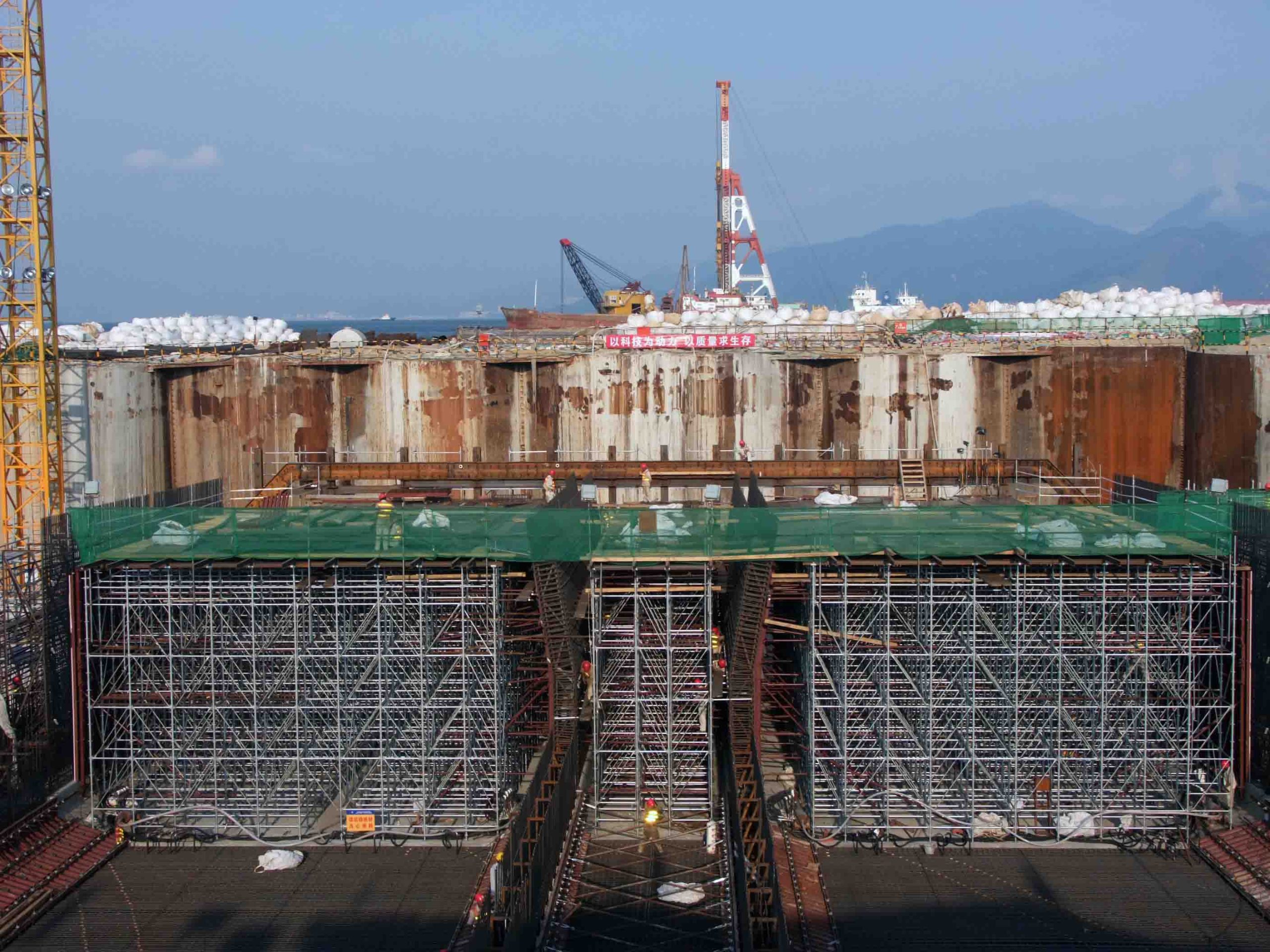
Location: China
Application: Bridge / Artificial Island Construction
Rapid Scope: Scaffolding & Formwork Solution

Bridge construction commonly uses modular scaffolding and heavy-duty shoring systems, depending on the structure, working height, required loads, and site conditions.
Ringlock scaffolding is widely used for bridge piers, access towers, working platforms, and other access applications because of its modular design and flexibility. For applications requiring higher load-bearing capacity, heavy-duty systems such as Rapid C60 can be considered. Octagonlock and Cuplock systems may also be used depending on the project requirements.
The appropriate system should be selected based on engineering calculations rather than the bridge type alone.
Bridge pier scaffolding is designed according to the pier geometry, height, required working levels, construction loads, access requirements, and surrounding site conditions.
Rapid’s engineering team reviews the available project drawings and technical requirements before developing the scaffolding layout. The design may include working platforms, access levels, stair towers, ties, bracing, and other necessary components.
For complex pier structures, 3D models and structural calculations can be used to verify the proposed arrangement and help determine the required materials before delivery.
Yes. Scaffolding can be designed to provide access beneath existing bridge decks for inspection, maintenance, repair, painting, and other construction activities.
The appropriate solution depends heavily on the site. Ground-supported scaffolding may be possible where sufficient space and suitable foundations are available. Where access from the ground is restricted by water, roads, railways, terrain, or other obstacles, a different engineered access arrangement may be required.
Rapid evaluates the bridge structure and site conditions before proposing a suitable under-bridge scaffolding solution.
For an initial bridge scaffolding design, the most useful information includes bridge drawings, dimensions, working height, required working areas, expected loads, construction method, site conditions, and access restrictions.
Information about ground conditions, traffic, water, nearby structures, and other site constraints is also important where applicable.
The more complete the project information is, the more accurately our engineering team can develop the scaffolding layout, calculate material quantities, and prepare a suitable solution. Customers can send available CAD drawings, PDF drawings, structural drawings, or other project documents to Rapid for review.
Yes. Rapid provides engineering support for project-specific scaffolding solutions, including scaffolding layout drawings, structural calculations, 3D models, material lists (BOM), and erection drawings, according to the requirements and scope of the project.
These documents help customers understand the proposed scaffolding arrangement, required components, material quantities, and installation sequence before construction begins.
For complex bridge projects, our engineering team can work with the customer’s project team to adjust the design according to actual structural and site requirements.
There is no single scaffolding system suitable for every heavy bridge project. System selection should be based on the required loads, support height, structural configuration, construction method, and site conditions.
For general access and working platforms, Ringlock scaffolding is commonly used because of its modularity and flexibility. Where significantly higher support loads are required, a heavy-duty shoring system such as Rapid C60 may be more appropriate.
Rapid can also combine different scaffolding and shoring systems within one project when different areas have different access and load requirements. Final system selection should be verified through project-specific engineering analysis and calculations.
Yes, but these projects require project-specific engineering because conventional ground-supported scaffolding may be restricted by water, traffic clearance, limited foundations, or other site conditions.
Depending on the bridge structure and construction requirements, the solution may involve localized support structures, working platforms, cantilever arrangements, or other engineered configurations.
Rapid’s engineering team reviews the bridge drawings, required working areas, loads, available support locations, and site restrictions before developing a proposed solution. For projects over active roads, traffic clearance and relevant local project requirements must also be incorporated into the final design and construction plan.
Yes. Rapid can provide on-site technical guidance for project-specific scaffolding and formwork solutions according to the project requirements and agreed service scope.
Our technical support can include guidance during pre-assembly and erection, checking the implementation of the proposed system, and assisting the customer’s site team with technical questions related to the supplied solution.
Engineering support can also continue remotely through drawings, 3D models, technical documents, and communication with the customer’s project team. The specific scope of on-site support is determined according to the project location and requirements.